


Understanding the Concept of Pain
Pain is defined as "An unpleasant sensory and emotional experience associated with, or resembling that associated with, actual or potential tissue damage." Pain is a complex experience consisting of a physiological and a psychological response to a noxious stimulus. Pain is a warning mechanism that protects an organism by influencing it to withdraw from harmful stimuli; it is primarily associated with injury or the threat of injury.
The pain sensation is only one part of the nociceptive response, which may include an increase in blood pressure, an increase in heart rate, and a reflexive withdrawal from the noxious stimulus.
Types of Pain
Acute Pain
An immediate intense feeling of short duration, sometimes described as a sharp pricking sensation, followed by a dull throbbing sensation.
Chronic Pain
Often associated with diseases such as cancer or arthritis. More difficult to locate and treat. If pain cannot be alleviated, psychological factors such as depression and anxiety can intensify the condition.
Physiology and Psychology of Pain
Despite its subjective nature, most pain is associated with tissue damage and has a physiological basis. The perception of pain results from the brain's processing of new sensory input with existing memories and emotions. Childhood experiences, cultural attitudes, heredity, and gender are factors that contribute to the development of each individual's perception of and response to different types of pain.
How poor sleep affects pain: Scientists identify neural glitches in the sleep-deprived brain that can intensify and prolong the agony of sickness and injury.
Pain Management Principles: According to the Pain Care Bill of Rights, USA, the patient suffering from pain has the right to get thoroughly assessed and promptly treated.
The Ideal Analgesic Must Be:
- EFFECTIVE
- SAFE FROM GI (stomach and intestinal) SIDE EFFECTS
- SAFE ON LONG TERMS USE
- SAFE ON KIDNEYS, HEART, BLOOD VESSELS
- HAVE ANTI-INFLAMMATORY ACTIVITY
- OFFER OTHER BENEFITS BEYOND PAIN RELIEF
- AFFORDABLE
Key Ingredients in Boslan
Boswellia serrata
Characterized by a marked anti-inflammatory profile, researched for potential to treat arthritis rheumatoid, neuroinflammation and neurodegeneration, asthma, atherosclerosis, inflammatory bowel, liver, kidney, pulmonary, and cardiac diseases.
Withania somnifera (Ashwagandha)
Known for its adaptogenic and anti-inflammatory properties, helps reduce stress-related pain, supports joint health, and provides antioxidant protection.
Curcuma longa (Turmeric)
Contains curcumin with powerful anti-inflammatory and antioxidant effects, supports joint health and helps manage chronic inflammatory conditions.
Pluchea lanceolata
Traditionally used for managing joint pain and inflammation, supports musculoskeletal health and enhances mobility.
Bioavailability Enhancement
Consuming Boslan together with a standard or high-fat meal can increase the bioavailability of boswellic acids. So, take after food. African meals are already rich in oil content.
Why Boslan is Your Best Choice for Pain Management
Boslan has been shown to be a very powerful combination of herbs that are useful in different kinds of painful and inflammatory conditions like internal, muscular, and joint pains of most origins with clear health benefits.
- Effective management of inflammation and pain which is the root cause of most painful problems
- Improved physical function
- Improved joint mobility
- Enhances bone and joint health
- Free from gastric irritation
- Can be used for long term management
- Few side effects
- Effective in ages 12 years and above
- Useful in different kinds of pain including menstrual pain/cramps
- Neuroprotective properties
Dosage of Boslan
- Adults and children from 13 years and above: Take 2 tablets twice daily after food.
- Children from 6 years - 12 years: Take 1 tablet twice daily after food.
Administration: Take after meals for optimal absorption.
Pain is a common complaint for all individuals in different stages of life. Musculoskeletal pain, being the leading and the most debilitating condition, is a major cause of concern for physically active people. Fast pain management and being pain free is key to a productive, active, and healthy life.
Safety Information and Side Effects
Side Effects
- Based on observations from clinical trials, adverse effects are consistently rare and there are no differences with placebo.
- Only mild gastrointestinal discomfort has been reported in more than one study: diarrhea, abdominal pain, and nausea.
- Continued consumption seems to be safe for more than 6 months.
- We do not know enough about its use during pregnancy or breastfeeding, so only give on advice of a health care provider.
Drug Interactions
Consuming Boslan together with a standard or high-fat meal can increase the bioavailability of boswellic acids. Therefore, take after food.
Alleviation of Pain
Attempts to relieve pain typically address both the physiological and the psychological aspects of pain. The reduction of anxiety, for example, may lessen the amount of medication needed to alleviate pain. Acute pain is generally the easiest to control; medication and rest are often effective treatments.
Chronic pain, defined generally as pain that has persisted for at least six months, presents the greatest challenge in pain management. Unrelieved chronic discomfort can cause psychological complications such as hypochondriasis, depression, sleep disturbances, loss of appetite, and feelings of helplessness.
Boslan's Comprehensive Benefits
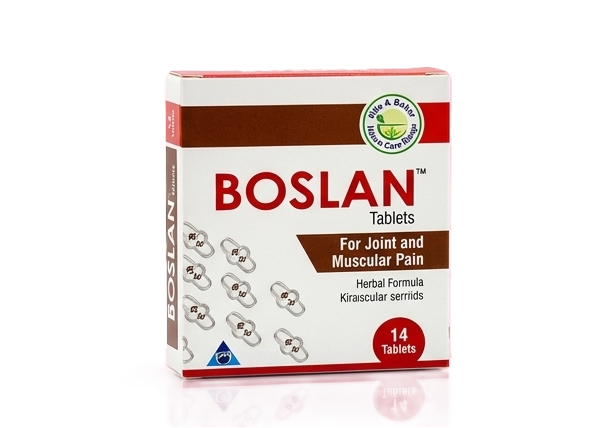
Boslan tab is a pain-relieving formulation enriched with herbs such as Boswellia serrata, Withania somnifera, Curcuma longa and Pluchea lanceolata, which help in the management of joints and muscular pains. They possess anti-inflammatory property which ensures adequate pain relief in acute pain, clinical improvements in pain free movements as seen in osteo-arthritis and in joints and muscular pains. The anti-oxidant protection for joints helps in enhanced flexibility and mobility and improving joint and bone health.
STOP THAT PAIN WITH BOSLAN